THEA by Macabre Gadgets is a collection of mythological jewelry inspired by Ancient Greek and Roman art, created in marble and sterling silver. The THEA line transforms legendary characters into wearable art, translating ancient mythology into sculptural jewelry.
Explore THEA by Macabre Gadgets jewlery line.
Greek Mythology Jewelry: Inspiration Behind the THEA Collection
Year after year we visit archaeological sites, explore museums, and study artefacts to better understand the ancient world. Each piece in our Greek mythology jewelry line tells a story thousands of years old. Discover the myths, symbolism, and ancient rituals that inspire our handcrafted pieces. Explore the THEA collection and discover the story behind the line.

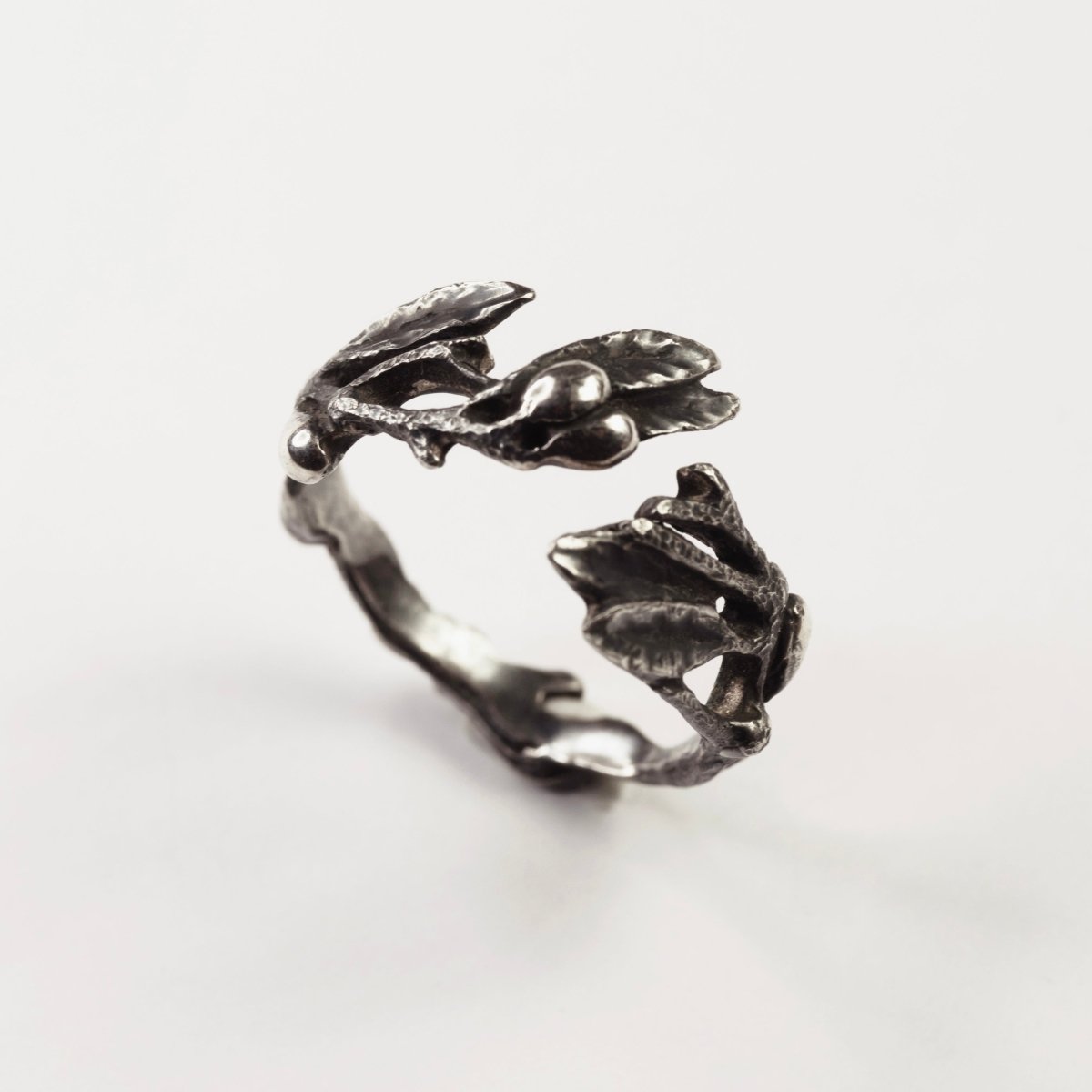
Left to right: 1) Temple of Apollo. Pompeii, Italy. 2) and 4) Olive Branch ring by Macabre Gadgets. 3) Athena of Velletri. Louvre Museum, Paris.
The Birth of THEA: Our Journey into Ancient Greek Jewelry
Our creative team shares a deep fascination with the ancient Hellenistic world, and THEA was one of the first collections we released back in 2012. At first, we were going to leave it as it was — a collection inspired by well-known stories and characters. But soon we realized that this was an impossible task: these stories cannot be contained within a single collection. They evolve over time, yet always remain relevant — and so should our perception of the Hellenistic world.
And like that, THEA became an ongoing line of jewelry inspired by ancient Greek mythology, art, history, and craft, but more importantly, by the complexity and beauty of this era.

Left to right: 1) Archeological site. Delos, Greece. 2) Ionic pendant by Macabre Gadgets.
Since we are a jewelry brand — a craft that relies on vision and sensuality — this subject feels especially rich to reimagine. THEA is our journey into the ancient world with all its strangeness and wonder, where centaurs and sea creatures still roam, and familiar myths can be seen from new perspectives.
We will not focus here on why and how such elaborate storytelling came to be, so tightly woven into religion. Instead, we are interested in its beauty — the raw sensuality of these stories and the elegance of the philosophy behind them.
In future posts, we will revisit this Hellenistic dream and explore its many layers. Today, we focus on gods and heroes — the core of these myths, characters whose names remain widely known.
Discover more about THEA by Macabre Gadgets.

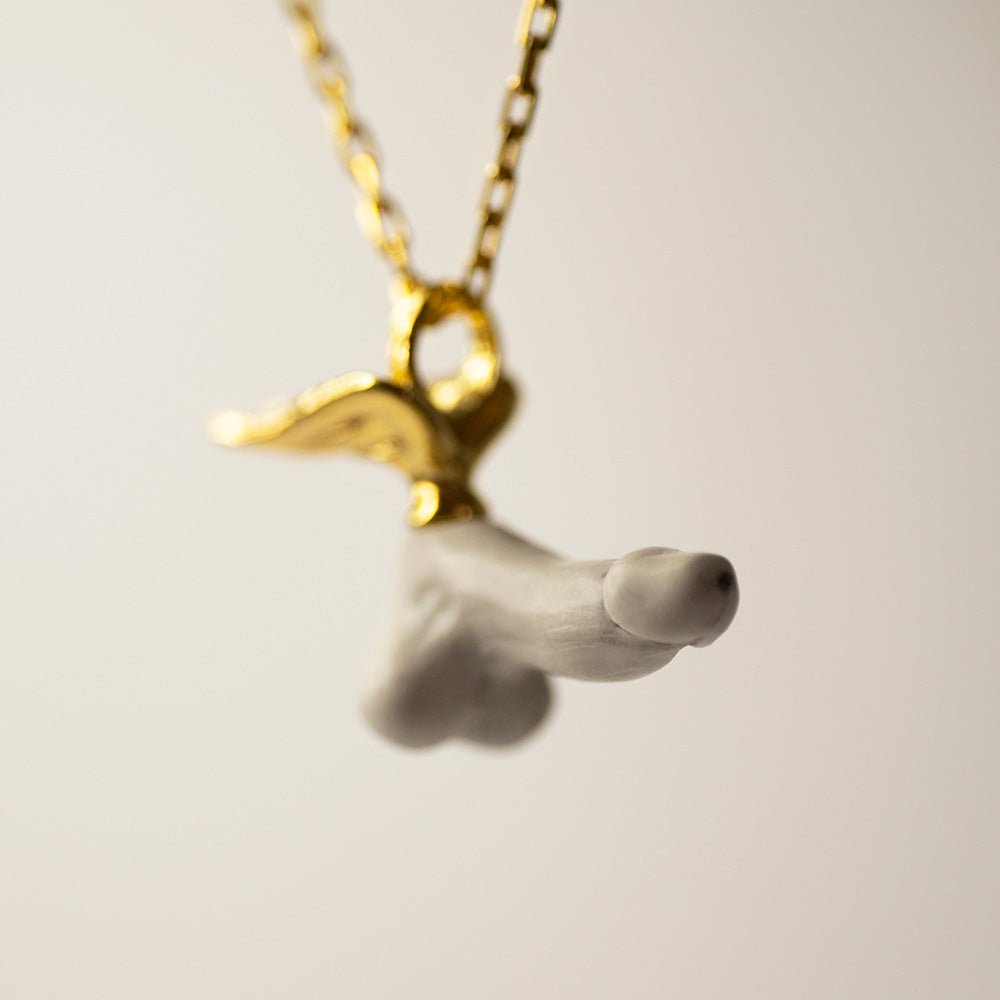
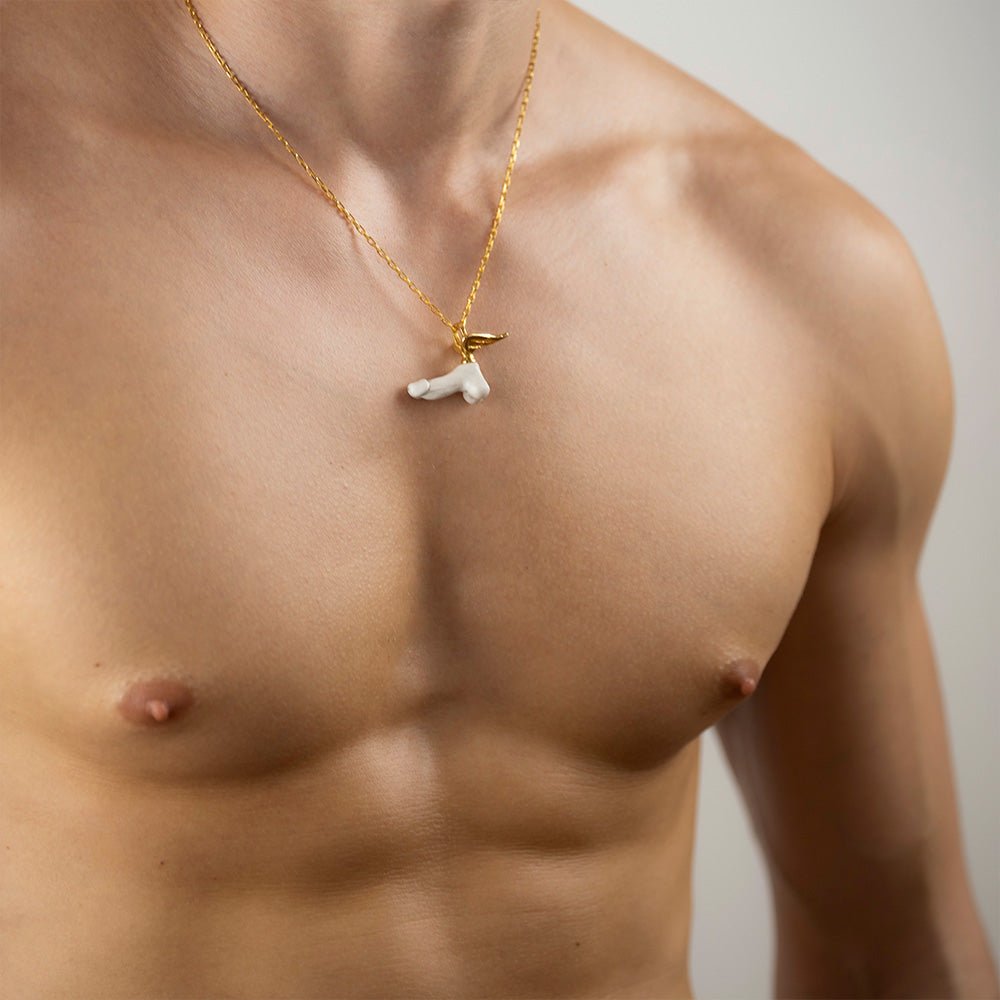
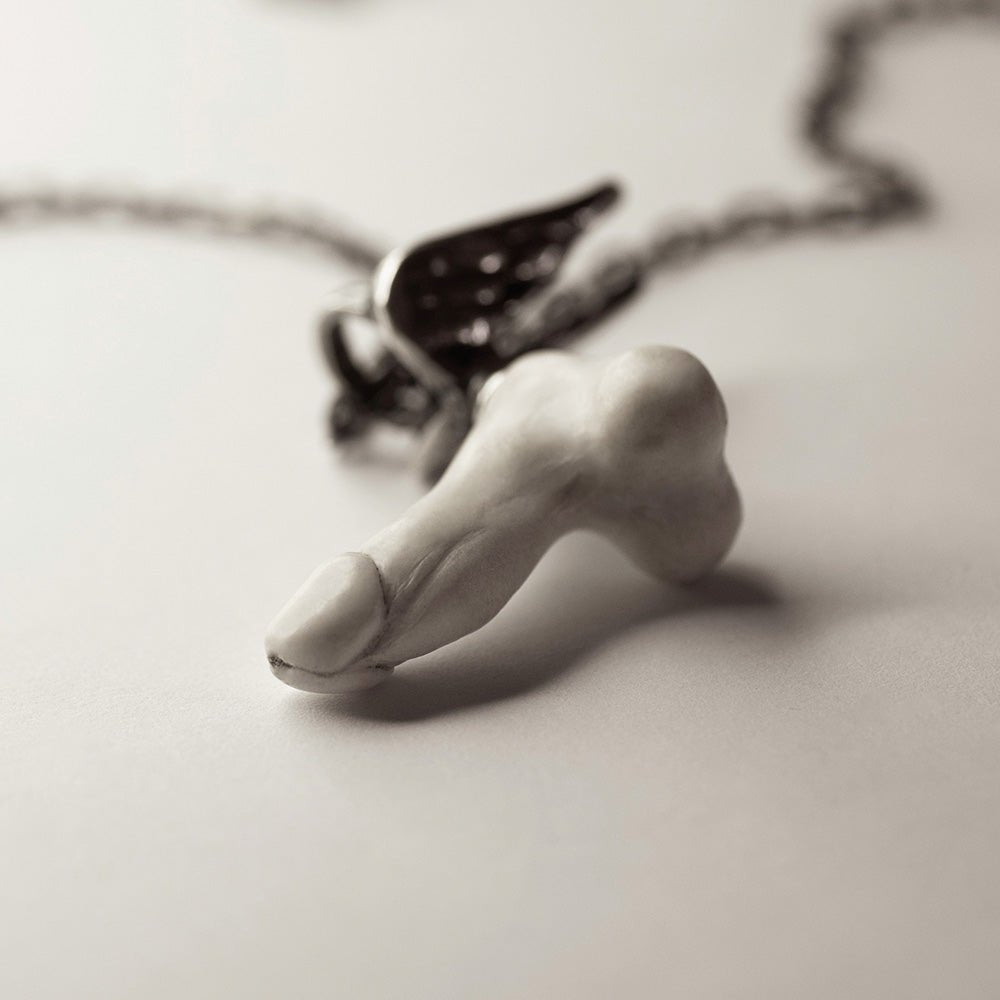
Male Torso pendant by Macabre Gadgets.
Greek Gods: From Chaos to Olympus
A quick word about the structure of Greek mythology. Since the beginning of Hellenistic civilisation, the Greeks explained nearly everything through myth — the creation of the world, the forces of nature, the movement of celestial bodies, and the nature of love and death. This created a complex system of mythology and religious belief that evolved and changed through time.
Olympians were not forever rulers of the world; they were, in fact, the third generation of deities. In the beginning, there were only primal elements rather than human-like gods. Greek mythology begins with Chaos, Gaia, Tartarus, and Eros — they represented the raw building blocks of existence. From them, the world began to take shape. Next were the Titans — twelve powerful but more human-like beings — Cronus, Rhea, Oceanus, Hyperion and others. For ages, the Titans ruled the cosmos.
Every new generation of deities came to power by force, and the Olympians were not an exception — through battles, deception, and alliances Zeus became the ruler of the world and the king of the gods. Beside him was Hera — his wife — equally vicious and powerful, and their siblings, cousins, and children. The whole family occupied Olympus, each one of them busy with their own craft.

Silver Zeus ring by Macabre Gadgets.
The Complexity of Divine Roles in Ancient Greece
And here is the tricky part — modern summaries lead us to believe that each and every one of them was a patron of a particular field, which is only partly true. Our perception is far more rigid than it should be; the ancient Greeks did not divide divine duties so neatly. Athena was not only the goddess of wisdom — she also oversaw warfare strategy, crafts, justice, urban governance, and more.
The meaning of each deity evolved over time and across regions. Hera started as a regional fertility goddess long before she became the queen of Olympus. Apollo at Delphi was the lord of prophecy; at Delos, a guardian of sailors. Moreover, multiple gods sometimes overlapped — the oversight of war was not only the personal duty of Ares but also Athena, Zeus, and even Artemis. The Olympian gods were not just archetypes — they were dynamic, evolving figures who reflected the ever-changing diversity of the ancient world.
Greek Heroes: Beyond the Simplified Mythological Narratives
Heroes in ancient Greece are celebrated figures, often — if not always — related to gods, and therefore possessing particular superhuman abilities. Orpheus — the divine musician, Heracles — the legendary demigod, Achilles — the invincible warrior, and many more.
Yet only fragments of their stories survive across different sources, and many details are often simplified today. For the ancient Greeks, these were not simple tales, but meaningful narratives that explained the world and offered cultural and moral guidance. Heroes were honoured, worshipped, and remembered through rituals and local cults — while modernity often reduces them to the standard "prince saving a princess" narrative.
Gods and Heroes as Inspiration for Mythological Jewelry
Our jewelry is inspired by the vivid presence of these figures — their stories, symbolism, and visual language — often aligning with our brand's darker perception of the world. Let's not forget that these divinities emerged in raw prehistoric times, when concepts of society and morality were very different from ours.
Zeus — King of Gods
The name "Zeus" likely comes from the Proto-Indo-European word for "daylight sky" or "sky father" — Dyeus or Diwe/Diwo — born in Crete, in a secret cave, to avoid being swallowed by his father, the youngest child of the Titans Cronus and Rhea. Father to half of the Olympians and countless heroes. Many myths and legends tell us about Zeus's character, sensuality, and power — not everything about him would be considered admirable today.
Worship rituals varied by location and context; nevertheless, sacrifices were a mandatory form of worship not only for Zeus but for any god, both publicly and privately. The size of a sacrifice was often proportional to the importance of the request. The most extreme example is the hecatomb, where every four years one hundred bulls were sacrificed to Zeus outside his temple, specifically on the third day of the ancient Olympic Games.

Left to right: 1) Sculpture of Zeus or Poseidon, Museo di Scultura Antica Giovanni Barracco, Rome. 2) and 3) Zeus ring by Macabre Gadgets. 4) Fragment of the head of the god Jupiter, Museum of Imperial Forum, Rome.
Athena — Goddess of Wisdom and Warfare
Goddess-protector of Athens, daughter of Zeus — born directly from his head, fully grown and armed with helmet and spear. Worshipped across the Mediterranean as a patron of armour-making and weaponry in Sparta, of shipbuilding and woodwork at Lindos (Rhodes), and many more. Most significantly, her cult was in Athens — the specific myth of the contest with Poseidon for the city's patronage, where Athena offered the olive tree to the people, was central to Athenian identity and physically represented on the Acropolis. The key ritual was the Panathenaic Festival, held every four years, featuring a grand procession to the Parthenon to offer a newly woven sacred peplos (robe) to the goddess's ancient wooden statue. The celebration also included sacrifices, athletic events, and musical contests.

Left to right: 1) Male model in drapes for Macabre Gadgets "Thea" campaign. 2) Athena Promachos, a Roman copy of a 5th-century BCE Greek sculpture. National Archaeological Museum, Naples. 3) Female model for Macabre Gadgets "Thea" campaign. 4) Athena pendant by Macabre Gadgets.
Heracles — The Legendary Demigod
Son of Zeus and the mortal woman Alcmene, the most famous demigod in modernity — and not without reason. He is mentioned in many works of ancient Greek literature, and depictions of his labours appear in all forms of art. But what we rarely see are the details that don't fit today's narrative — details that give a clearer picture of the time when stories like his were important and relevant. His sexual might was no less legendary than his strength; he had countless lovers — women, men, and non-human figures. He was worshipped in his own cult both as a hero and a god, celebrated as the founder of Gades (modern Cádiz, Spain), and the only Greek hero to physically defeat a personification of death — Thanatos.

Left to right: 1) Heracles ring by Macabre Gadgets. 2) Hercules and Lichas by Antonio Canova, National Gallery of Modern and Contemporary Art, Rome.
Achilles — The Invincible Warrior
Son of the goddess Thetis and the mortal king Peleus, an invincible warrior and a significant figure in the story of the Trojan War. In earlier tales — in Homer's Iliad — there is no mention of him being dipped into the river Styx to become invincible; he is simply very fast, strong, and favoured by the gods. He is described as tall, striking, with long golden hair. He was worshipped as a hero, not a god, with night sacrifices of black animals (usually a black ram). With no regret he avenges Patroclus's death and kills Hector, knowing that he will be fulfilling the prophecy that his own death is to follow. The ghost of Patroclus comes to see Achilles with the request to mix their ashes in a single urn, and his wish is fulfilled — Achilles and Patroclus are buried in a single gold funerary urn.

Left to right: 1) Veiled female model for Macabre Gadgets "Thea" campaign. 2) The Wounded Achilles by Filippo Albacini, National Academy of San Luca Museum, Rome. 3) Achilles earring and Heracles earring by Macabre Gadgets. 4) Achilles ring by Macabre Gadgets.
Medusa — The Fearsome Creature
One of the three Gorgon sisters and the only mortal among them, daughter of the sea gods Phorcys and Ceto. In earlier Greek myths (traceable to around the 8th century BCE) she and her immortal sisters are described as naturally born winged creatures with snakes instead of hair and the ability to turn onlookers to stone. In later versions of the Medusa myth — such as the one by the Roman poet Ovid (1st century BCE) — she became a beautiful maiden cursed to transform into such a creature by Athena. There is no evidence that Medusa herself had a cult, but her image was widely used as a protective symbol — especially in Archaic-period architecture and art — as a ward against evil.

Left to right, top row: 1) Medusa pendant by Macabre Gadgets. 2) Roman mosaic with the head of Medusa, National Roman Museum, Rome. 3) Medusa Shield pendant by Macabre Gadgets. Bottom row: 1) Marble mantlepiece featuring Medusa's head, Corfu Museum of Asian Art, Corfu. 2) Medusa Shield pendant by Macabre Gadgets. 3) Medusa ring by Macabre Gadgets.
The gods and heroes of Ancient Greece — with all their complexity, contradictions, and raw power — continue to inspire our THEA line. Each piece in our collection captures not only their appearance, but the sensuality, philosophy, and symbolism of the ancient world.
Explore THEA by Macabre Gadgets jewlery line and discover which of these enduring symbols speaks to you.
Frequently Asked Questions
What is THEA by Macabre Gadgets?
THEA is a line of handcrafted mythological jewelry by Macabre Gadgets, inspired by Ancient Greek and Roman art and mythology. Each piece is sculpted and finished by hand in marble, sterling silver, and gold — designed as a wearable fragment of the ancient world.
What is Greek mythology jewelry?
Greek mythology jewelry refers to pieces inspired by ancient myths, gods, and heroes, drawing on classical symbolism, art, and historical narratives. At Macabre Gadgets, this means handcrafted sculptural pieces in marble and silver that draw directly from ancient Greek and Roman sources — not as decoration, but as objects with meaning and presence.
What is marble jewelry?
Marble jewelry uses natural or bonded stone — the same material used in classical Greek and Roman sculpture — shaped into wearable forms. In THEA pieces, marble is hand-sculpted to reference ancient art and architecture, giving each piece weight, texture, and a direct connection to antiquity. No two marble pieces are identical.
What materials are used in THEA jewelry?
THEA pieces are handcrafted in marble, sterling silver, and gold — combining sculptural stone with precious metal to create objects that feel both ancient and contemporary.
Which Greek gods and heroes inspire THEA?
THEA draws inspiration from figures such as Zeus, Athena, Heracles, Achilles, and Medusa, reinterpreting their symbolism and visual language into sculptural jewelry. Each figure is explored in depth in this series of posts.
Is THEA by Macabre Gadgets jewelry handcrafted?
Yes, every piece is individually handcrafted by one of three artisans in the studio, from the initial sculpt to the final finish. There is no mass production — each object passes through a complete cycle of making.
Where can I find the THEA collection?
The full THEA collection is available at macabregadgets.com/collections/thea-by-macabre-gadgets. Each piece is produced in limited quantities due to its handcrafted nature.
Will there be more posts about Greek mythology and THEA?
Yes — this is the first in an ongoing series exploring the myths, symbols, rituals, and visual culture behind the THEA line. Future posts will cover topics such as ancient Greek symbols and rituals, the influence of classical sculpture on our designs, and the stories behind individual pieces.